

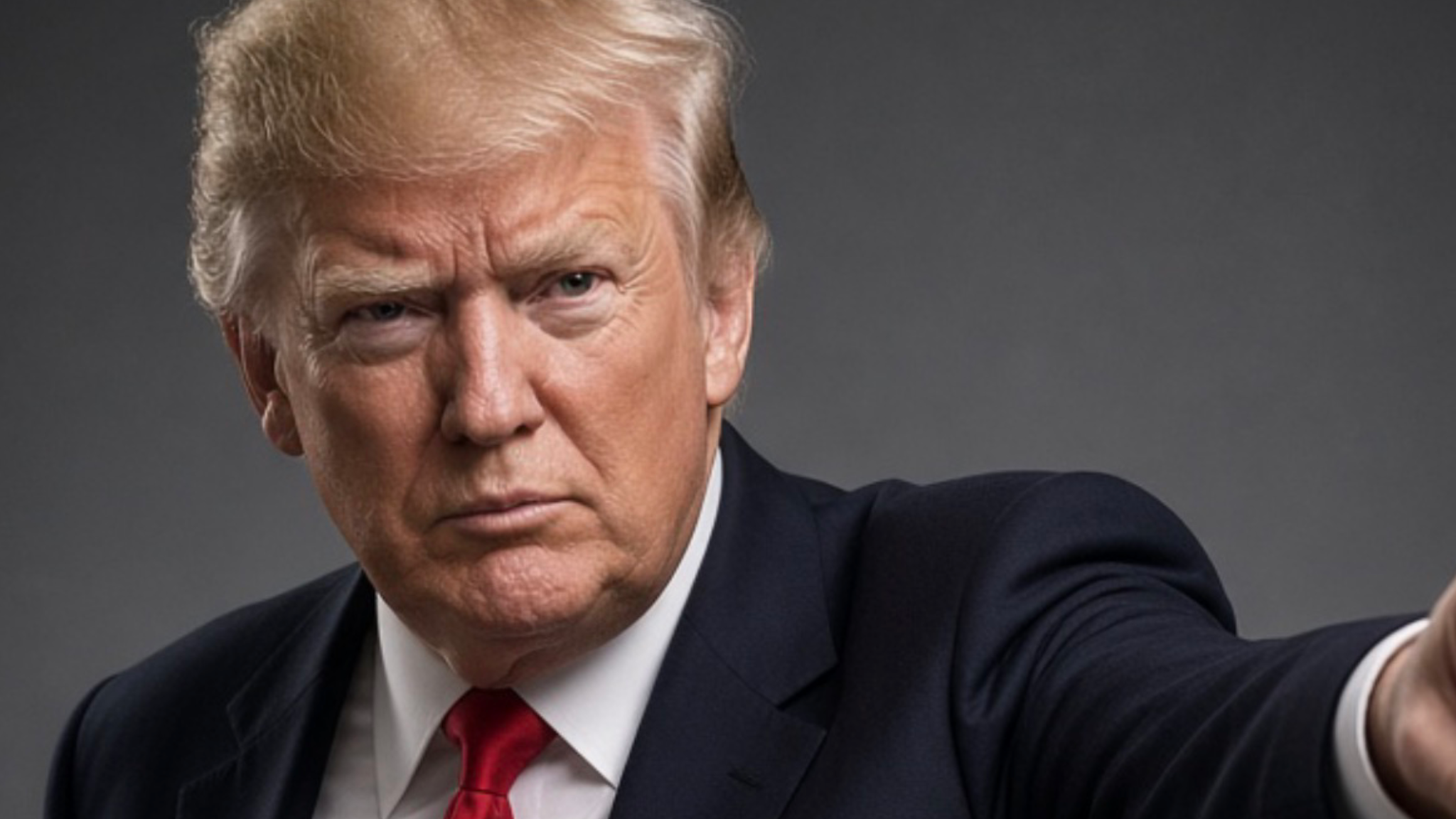
Donald Trump says his political operation will spend more than $400 million to help Republicans win the November 3 midterm elections, pouring massive resources into congressional races as Democrats fight to regain control of Washington.
Trump announced the spending commitment Tuesday, October 20, with just two weeks remaining before voters decide which party controls the House of Representatives and Senate.
Trump detailed the spending in a Truth Social post, saying his political network had already committed hundreds of millions toward Republican campaigns.
“More than 300 Million Dollars has already been spent on Advertising, Direct and Indirect Voter Contact, Rallies, Rally Arenas, Telerallies, Get Out the Vote Programs, Election Integrity, and more. It is my Great Honor to do so on behalf of the Republican Party, which has done so much to bring our Country back from the Edge of Oblivion,” Trump wrote.
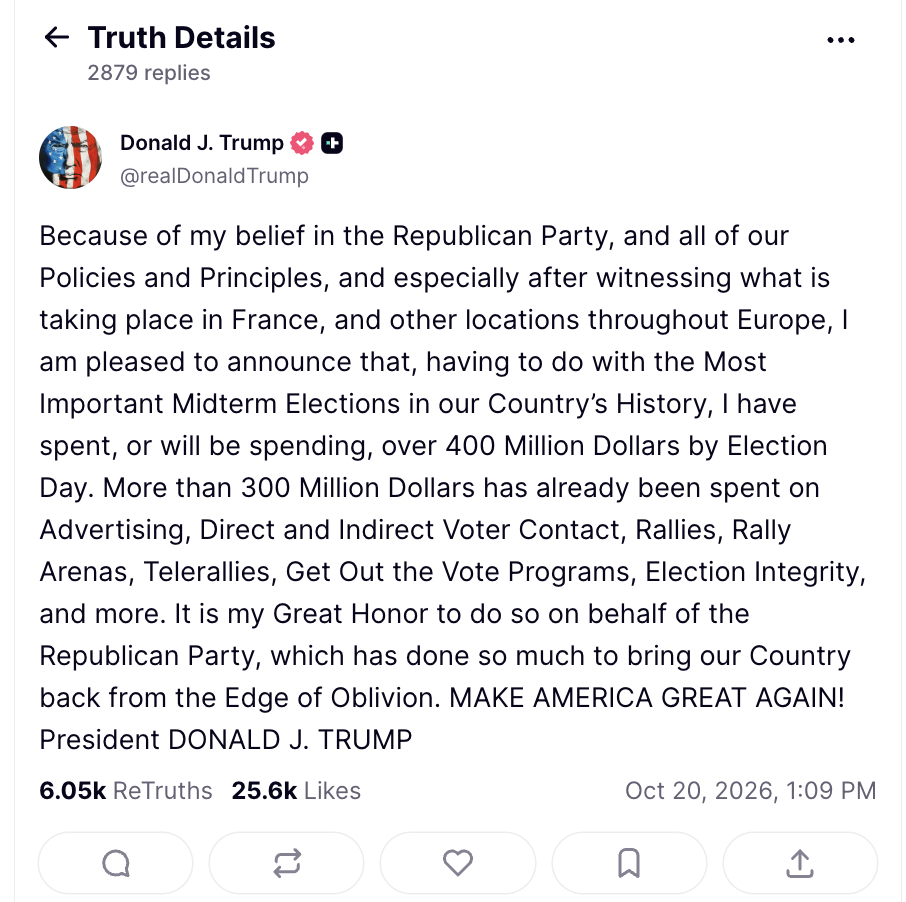
While Trump claims his operation has already spent more than $300 million, available campaign finance records do not independently establish his entire projected total. Reuters reported that MAGA Inc. and its affiliated No Going Back PAC had spent at least $226 million on the elections, according to campaign filings.
The money is being deployed through Trump’s broader political network, including organizations funded by wealthy contributors. His announcement does not mean he personally contributed $400 million from his own finances.
MAGA Inc. has become one of the most powerful organizations supporting Trump’s political agenda. According to FactCheck.org, the super PAC spent approximately $456.8 million during the 2024 election cycle and reported roughly $415.8 million in available cash as of August 31, 2026.
Unlike traditional political campaigns, super PACs can accept unlimited contributions from individuals and other eligible donors. Federal election rules prohibit them from coordinating their independent spending with candidates or political parties. They must also disclose their donors, making campaign finance filings an important way to track who is financing political advertising.
The latest Trump midterm spending announcement arrives during an election cycle already breaking financial records.
According to Reuters’ election analysis, data from AdImpact showed that $3.8 billion had been spent on aired political advertisements as of October 12. Some of the heaviest spending has targeted competitive Senate races in Texas, Ohio and Michigan.
Trump also has substantial financial support from wealthy allies. Reuters reported that Elon Musk had spent approximately $366 million supporting Republicans, according to campaign finance records.
Democrats are answering with their own major financial commitments.
Former New York City Mayor Michael Bloomberg is directing approximately $80 million toward Democratic candidates and organizations, according to reporting by The New York Times cited by Reuters. At least $50 million is reportedly earmarked for House races, including $24 million for Everytown for Gun Safety and $16 million for House Majority PAC.
Reuters said it had not independently confirmed Bloomberg’s reported spending.
The battle for Congress is particularly close in the House. Reuters reported that Republicans currently hold 218 seats compared with Democrats’ 214, with two vacancies and one independent who caucuses with Republicans. Democrats need a net gain of four seats to take control.
In the Senate, Republicans hold a 53-to-47 advantage. Democrats would also need to gain four seats to secure a majority.
A Democratic victory in the House would create another historic possibility for New York Congressman Hakeem Jeffries. As the current House Democratic leader, Jeffries could become the first Black Speaker of the House if his party wins control and elects him to the position.
Reuters reported that a Democratic House majority could also lead to congressional investigations into Trump’s administration, while giving Jeffries greater influence over legislative priorities involving healthcare, housing and everyday living expenses.
The 2026 midterm elections are also becoming a referendum on Trump’s leadership, even though his name will not appear on the ballot.
According to an Associated Press analysis, Democratic candidates and their allies spent more than $163 million on television advertisements mentioning Trump between September 1 and mid-October. Those ads aired nearly 180,000 times across broadcast, cable and streaming platforms.
Republicans, meanwhile, spent an estimated $11 million on advertisements mentioning Trump during the same period, with approximately 16,000 airings.
Much of the Democratic advertising has focused on the cost of living, tariffs, healthcare expenses and the economic effects of Trump’s policies. The AP reported that Georgia Senator Jon Ossoff’s campaign spent nearly $3 million on an advertisement connecting his Republican opponent, Mike Collins, to Trump.
Republicans have emphasized issues including taxes and crime, while some candidates have relied less heavily on Trump in their advertising.
Economic concerns could influence the outcome. Reuters reported that Trump’s approval rating stood at 32% in a September Reuters/Ipsos poll. Rising consumer prices and frustration over immigration enforcement have also created political challenges for Republicans.
Historical election results show how quickly congressional control can shift. During Trump’s first administration, Democrats gained a net 40 House seats in the 2018 midterms. Eight years later, they are attempting another takeover with Trump back in the White House.
Trump’s latest spending commitment gives Republicans substantial financial resources for advertising, voter outreach, and turnout operations before Election Day.
But financial advantages do not guarantee victories. Democrats are counting on economic dissatisfaction and voter enthusiasm to overcome Republican spending in competitive districts.
