

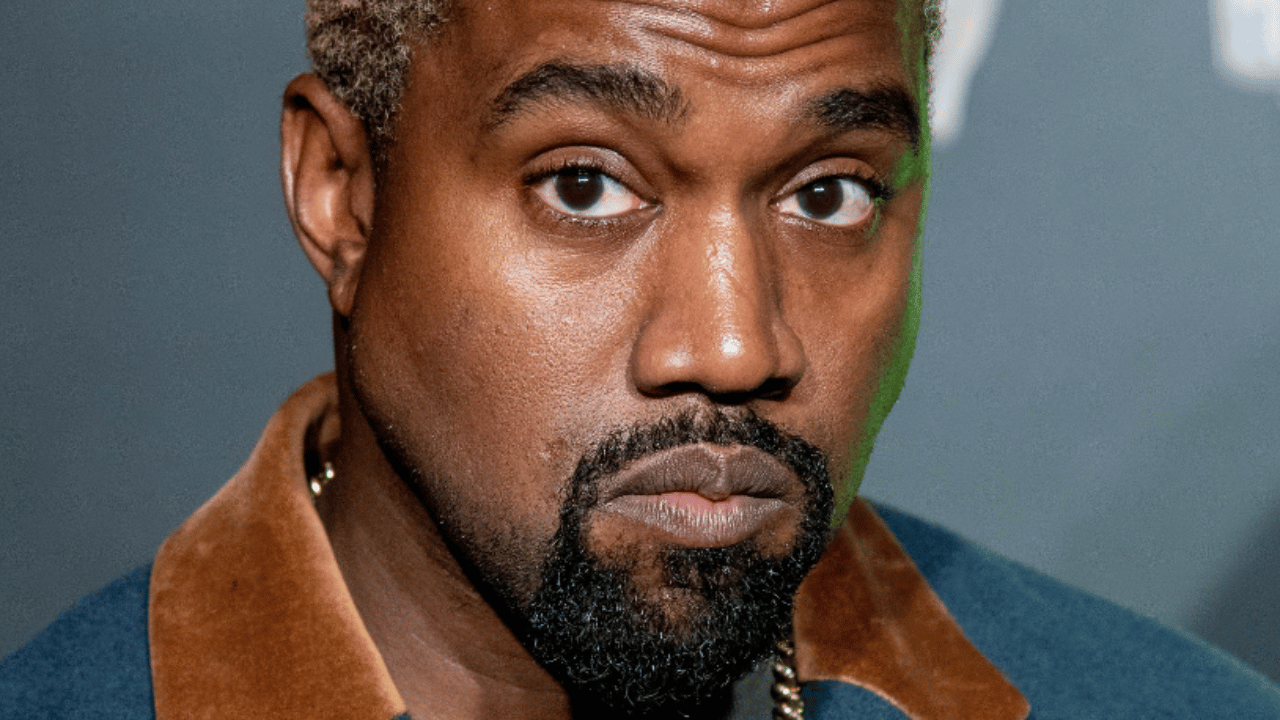
Another day, another Ye lawsuit and this time, his music is being put in the hot seat. An anonymous creator claims Ye used his AI-powered production work across multiple songs without paying or properly crediting him. The case is not simply another dispute over an unpaid studio bill. It raises larger questions about who owns the labor behind digitally reconstructed voices and whether the people building those sounds are receiving recognition when the finished music reaches streaming platforms.
According to TMZ, the producer filed the case under the name John Doe and claims Ye’s team brought him into the “Vultures 2” sessions on August 1, 2024. That was only two days before Ye and Ty Dolla $ign released the collaborative album on August 3. Doe alleges that Ye personally directed the rushed recording process while the producer worked to complete vocals before the project reached listeners.
Doe says he was hired on “an emergency basis.” The producer alleges that his assignment resulted in “at least 13 custom AI voice models, more than 400 individual vocal generations, and source material using his own voice.” Those claims place the Ye producer lawsuit directly inside the growing industry debate over how artificial intelligence is changing vocal production, songwriting, performance, and ownership.
TMZ reports that Doe was allegedly asked to reconstruct existing vocals and convert performances into modeled versions of other artists’ voices. He also claims some of his personal recordings became source material for the process and appeared in finished masters. According to the lawsuit, his contributions can be heard on five songs from “Vultures 2,” although the publicly available reports have not identified which five tracks are involved.
The producer says the working relationship continued after “Vultures 2.” Doe began contributing additional AI vocal programming to “Bully” in October 2024. TMZ says he claims his work appeared on two released “Bully” tracks and several unreleased recordings, bringing the number of commercially released songs at the center of the dispute to seven.
Doe alleges that members of Ye’s team acknowledged his contributions in late 2024 and discussed correcting his credits on digital streaming services. The producer also claims the team presented the possibility of buying out his interest in the master recordings. However, he says neither the payment nor the promised credit changes arrived, even after he repeatedly contacted Ye’s business representatives seeking compensation.
The financial demand behind the Ye producer lawsuit is at least $110,000 for the seven released tracks. TMZ reports that Doe is seeking $80,000 for his alleged “Vultures 2” work and another $30,000 for “Bully.” He is also seeking additional damages connected to the unreleased music and wants the court to require Ye’s companies to add his name to the appropriate production credits on streaming platforms.
Pitchfork reports that the complaint includes claims for breach of contract, unjust enrichment, violations of California’s Unfair Competition Law, and alleged violations of the Los Angeles Freelance Worker Protections Ordinance. The City of Los Angeles Office of Wage Standards says that ordinance has covered qualifying freelance service agreements valued at $600 or more since July 1, 2023. The law was created to help freelancers secure written agreements and receive compensation in a timely manner. Whether Doe’s specific allegations satisfy those legal requirements will be determined through the court process.
The AI element did not appear out of nowhere. When “Vultures 2” arrived in August 2024, several fans documented suspicions that modeled vocals had been used on songs including “Sky City” and “Field Trip.” Listeners compared sections of the recordings with performances associated with CyHi the Prynce and Ty Dolla $ign, but those online theories were not independently confirmed at the time. Doe’s new allegations do not automatically prove every theory that circulated after the album’s release, but they give the earlier conversation new relevance.
The lawsuit also creates tension around the messaging that surrounded Ye’s next album. In March 2026, Ye promoted “Bully” with the statement, “BULLY ON THE WAY NO AI.” Ye had previously described AI as part of his creative process, saying he used it “the same way I incorporated Auto-Tune. It’s a tool, not a replacement.”
That album was eventually released to streaming services following a March 27, 2026. Ye had previously said a significant portion of the album involved AI before later walking back that description. Doe’s lawsuit now alleges that AI vocal programming connected to his work was used during the project’s development, but Ye and his companies will have the opportunity to challenge that account in court.
For music creators, the outcome could matter beyond Ye’s catalog. AI can make a performer’s voice sound endlessly adjustable, but the technology still depends on human direction, recordings, editing, and technical labor. When that labor disappears from the credits, listeners may never know who helped shape the performance they are hearing. For a producer who says his own voice helped make the finished music, the fight is now about whether the industry can treat invisible labor as disposable once the song starts streaming.
